.png?width=1198&name=EDC_cmyk_orange-white%20horizontal.F%20(1).png "EDC_cmyk_orange-white horizontal.F (1)")

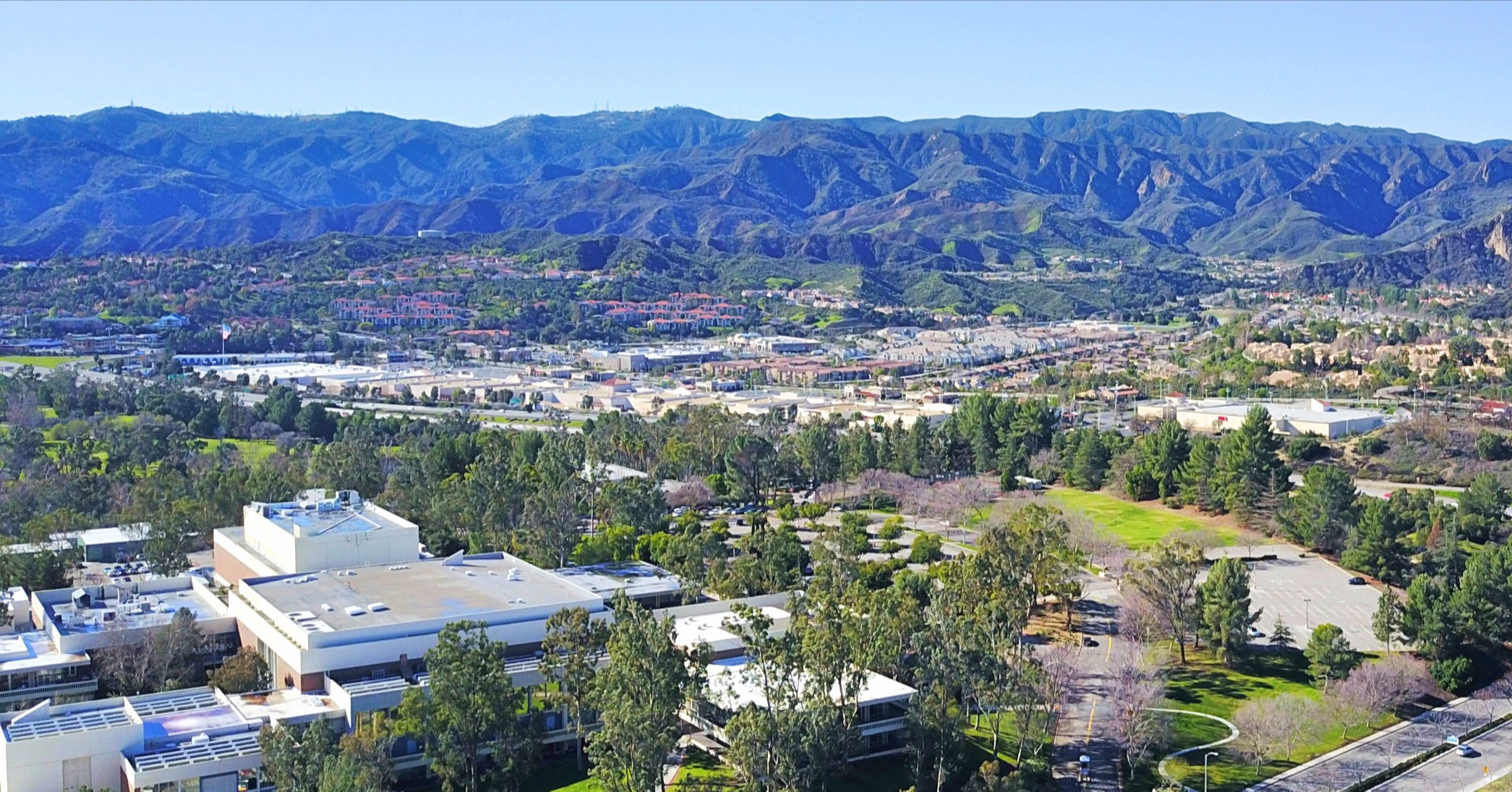
When we talk about building a strong economy in the Santa Clarita Valley, we often focus on attracting new businesses or celebrating major expansions. Those moments matter. But long-term economic strength is built more quietly—through people, skills, and confidence in what comes next.
Businesses need to know they can find the right talent when they’re ready to grow.
Workers need to see clear pathways to good jobs close to home.
And communities need stability—especially in periods of economic uncertainty.
That’s why workforce development isn’t just a social good. It’s one of the clearest indicators of whether a local economy is built to last.
As job growth slows across much of the region (and the nation) and employers weigh expansion more carefully, access to skilled, job-ready talent has become a decisive factor in whether businesses stay, grow, or look elsewhere. Understanding that reality—and responding to it intentionally—is what makes the findings from the High Road Training Partnership so timely.
Why the High Road Training Partnership Matters—Right Now
 The High Road Training Partnership (HRTP) is a state-funded initiative that brings employers, educators, and workforce leaders together to align training with real, in-demand jobs—particularly in high-growth sectors like advanced manufacturing and aerospace.
At its core, HRTP is about listening first. It creates space for employers to articulate what they actually need, then uses that insight to shape training programs that lead to meaningful, long-term employment. In a moment when businesses are being cautious about growth, that kind of alignment isn’t just helpful—it’s essential.
The Santa Clarita Valley Economic Development Corporation (SCVEDC) helps turn this kind of collaboration into action. As the region’s industry convener, SCVEDC brings employers together, translates real business needs into shared priorities, and coordinates workforce resources. The result is training that actually reflects how companies operate today—and where they’re headed next.
College of the Canyons (COC) serves as a key partner in this effort, leading the HRTP work on the education side and ensuring programs remain responsive to industry input. That collaboration is especially visible at the college’s Advanced Technology Center (ATC), which offers hands-on, industry-aligned learning to students preparing to enter technical and manufacturing careers.
The ATC isn’t separate from the HRTP—it’s a tangible expression of the same philosophy: education shaped by real-world demand and strengthened through partnership.
As COC Interim Superintendent-President Dr. Jasmine Ruys explains:
“The Advanced Technology Center represents a powerful investment in the future of Santa Clarita. Its purpose is to align education with real workforce needs, giving local businesses access to a skilled employee pipeline while creating new opportunities for residents to train for high-quality, in-demand careers. This collaboration strengthens our regional economy and reinforces the vital role industry partnerships play in building a sustainable future for our community.”
Through the HRTP, SCVEDC and COC are creating a more connected workforce system—one that responds faster, aligns more closely, and delivers clearer pathways from training to employment.
What Employers Told Us: Key Workforce Challenges
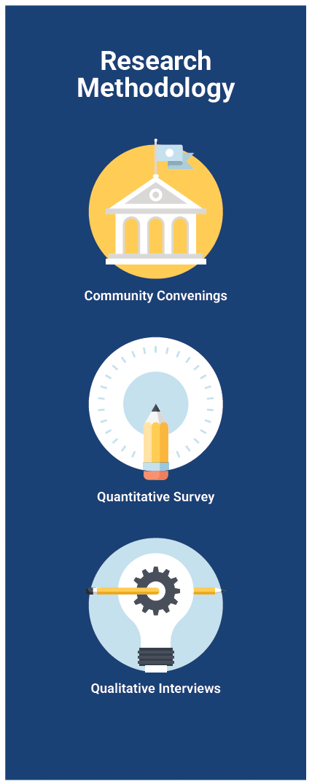
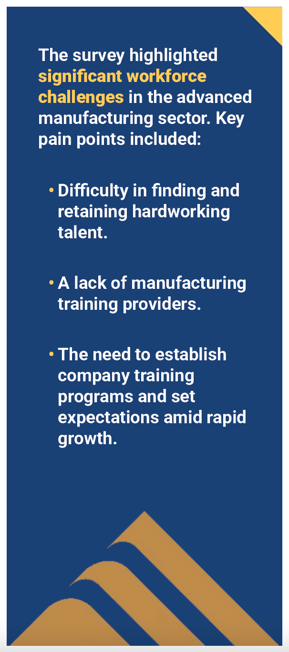
Through surveys, convenings, and direct conversations with executives, managers, and frontline workers, a clear picture emerged of the workforce challenges shaping business decisions across the Santa Clarita Valley.
Hiring Isn’t the Hard Part—Finding Job-Ready Talent Is
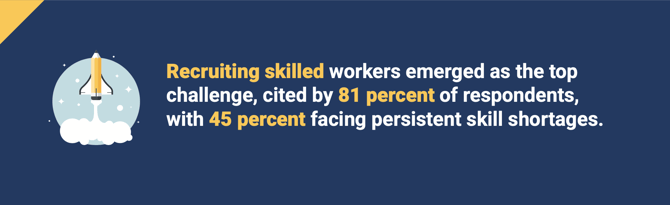
More than 80 percent of local employers reported difficulty recruiting skilled workers. The issue isn’t interest—it’s readiness. Employers are looking for candidates who can step into technical, hands-on roles with confidence, not just basic exposure. When that gap exists, onboarding takes longer, productivity slows, and growth plans stall.
Retention Pressures Are Rising Across Industries
Competition for skilled talent across Southern California continues to intensify. Employers shared growing concerns about turnover, rising replacement costs, and the strain constant rehiring places on teams. Retention has become just as critical as recruitment—especially for specialized roles that take time to train.
Keeping Education and Industry Aligned Takes Ongoing Work
Local education partners are deeply committed to preparing students for high-quality careers. The challenge employers identified isn’t a lack of effort—it’s pace. Technology, processes, and skill requirements evolve quickly, and training programs require ongoing, real-time input from industry to stay aligned. Closing that gap requires constant collaboration, not one-time curriculum design.
Technology Is Advancing Faster Than Workforce Readiness
Many employers are exploring automation and AI, particularly in planning and administrative functions. But adoption on the production floor remains cautious. Workforce readiness, change management, and cybersecurity concerns all shape those decisions. Without aligned training, innovation slows—and so does competitiveness.
Taken together, these challenges aren’t isolated frustrations. They’re early indicators of whether a region can sustain long-term growth. Understanding them is only the first step—and only matters if someone is positioned to act.
From Insight to Action: Coordinating Solutions That Work
 The value of the HRTP effort lies in what happens next.
One of the most actionable strategies to emerge from the research is the rotational internship and “learn-and-earn” model. Hosted inside local businesses, this approach allows interns—students or incumbent workers—to rotate through multiple departments, gaining hands-on experience while employers evaluate talent in real-world environments. Companies implementing this model saw a 43 percent increase in retention and a 33 percent boost in engagement—demonstrating that thoughtful workforce design delivers measurable results.
Beyond individual programs, alignment requires structured forward momentum. Building on the HRTP findings, SCVEDC and COC have launched a regional HRTP task force to continue the work. The group uses a nationally recognized, employer-led approach—often referred to as the BILT model—that gives businesses a direct role in shaping training. Employers vote annually on the skills, tools, and competencies they need in new hires, ensuring education evolves alongside industry.
Equally important are the ongoing employer convenings led by SCVEDC. These gatherings create a consistent forum for manufacturers and industry leaders to coordinate workforce resources, share best practices, and respond quickly to emerging needs. Rather than working in silos, employers are able to learn from one another while staying connected to training partners and workforce programs that can adapt in real time.
Workforce alignment at this scale doesn’t happen by chance—it requires an organization focused on coordination, follow-through, and long-term economic impact.
This is where SCVEDC’s role becomes most visible: connecting insight to action, and ensuring workforce investments translate into tangible outcomes for employers and workers alike.
A Competitive Advantage for the Santa Clarita Valley
The Santa Clarita Valley is already recognized as one of Southern California’s most business-friendly regions, with strengths across aerospace, medical devices, advanced manufacturing, and emerging technologies. And the HRTP reinforces a key differentiator: a coordinated ecosystem where industry, education, and economic development move together.
For employers, that means:
- Better access to skilled, job-ready talent
- Training aligned with real operations
- Reduced hiring friction and onboarding costs
- A region committed to long-term competitiveness
Workforce alignment doesn’t just support existing businesses—it strengthens business attraction and expansion by reducing risk and increasing confidence in the region’s ability to grow with them.
Economic Development in Action
SCVEDC’s role is to connect the dots—between employers, educators, workforce partners, and regional strategy. The HRTP findings are not an endpoint; they are a tool that informs how businesses are supported today and how the workforce is prepared for what’s next.
At a system level, this work requires stewardship. SCVEDC fulfills that role by aligning workforce development with employer demand—helping ensure the Santa Clarita Valley remains competitive through changing economic conditions.
That stewardship—connecting insight, execution, and long-term strategy—is what distinguishes economic development that reacts from economic development that leads.
As SCVEDC President & CEO Ondré Seltzer notes:
“This work is about employers. Our role as an economic development organization is to bring industry to the table, translate workforce challenges into action, and build partnerships that deliver practical solutions. By working alongside COC, we’re ensuring training, talent pipelines, and workforce investments align with how companies actually operate today—and where they’re headed tomorrow.”
That alignment is what turns workforce development into economic stability.
Moving Forward—Together
When workforce systems align with employer demand, everyone benefits. Businesses grow with confidence. Workers build lasting careers close to home. And the region becomes more resilient—no matter what economic shifts lie ahead.
That’s economic development in action.
If you're a local business looking to strengthen your talent pipeline—or a resident exploring long-term career opportunities—we're here to help connect the dots. Read the full report for more information, and reach out to SCVEDC to start the conversation.